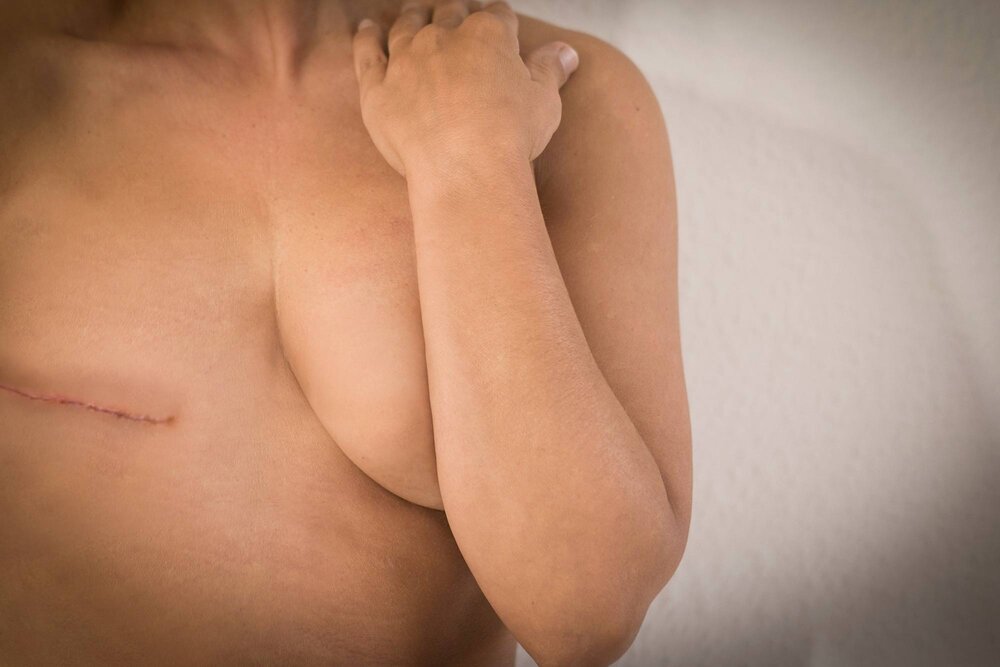
A breast cancer diagnosis brings an enormous amount of information to process in a very short time. Reconstruction decisions are often made under that pressure, and many patients later realize they didn't fully understand their options before surgery. This guide is designed to give you the foundational knowledge to have an informed conversation with your reconstructive surgeon — ideally before the mastectomy, not after.
Immediate vs. Delayed Reconstruction
The first decision is timing. Immediate reconstruction means the reconstructive procedure begins at the same surgery as the mastectomy. Delayed reconstruction means the mastectomy is performed first — leaving a flat chest — and reconstruction is begun months or years later, once oncology treatment is complete.
Immediate reconstruction has significant advantages when it is medically appropriate. Patients avoid the psychological experience of waking up without a breast. The mastectomy surgeon and reconstructive surgeon can coordinate to preserve the skin envelope and, in selected cases, the nipple — making reconstruction technically easier and the result more natural. Most patients who are candidates for immediate reconstruction choose it.
Delayed reconstruction is sometimes the better choice. Patients who require post-mastectomy radiation are often better served by delaying implant-based reconstruction, because radiation significantly increases complication rates in expander-implant reconstruction. Patients who are not certain they want reconstruction, or who are focused entirely on oncology treatment and do not want to think about reconstruction until later, are also appropriate candidates for delay. There is no medical disadvantage to waiting — patients can proceed with reconstruction years after their mastectomy with good results.
Implant-Based vs. Autologous (Flap) Reconstruction
The most fundamental technical choice in reconstruction is whether to use implants or the patient's own tissue.
Implant-based reconstruction is the more common approach in the United States. It is performed in stages: first, a tissue expander is placed beneath the chest muscle at the time of mastectomy. Over the following weeks to months, saline is gradually added to the expander in office visits, stretching the tissue to accommodate the final implant volume. In a second surgery, the expander is exchanged for a permanent implant. Some patients are candidates for "direct-to-implant" reconstruction, which skips the expander and places the permanent implant at the first surgery — but this requires favorable tissue conditions and is not appropriate for every patient.
Autologous (flap) reconstruction uses the patient's own tissue — skin, fat, and sometimes muscle — from another part of the body to recreate the breast mound. The most common donor sites are the abdomen (TRAM and DIEP flaps) and the back (latissimus dorsi flap). Flap reconstruction typically produces a more natural look and feel than implant-based reconstruction, because the result is living tissue that ages naturally with the body. It is a more complex operation with longer recovery, but it eliminates the long-term maintenance concerns associated with implants and generally performs better in patients who require radiation.
The right choice depends on many factors: the patient's body type and available donor tissue, whether radiation is planned, the mastectomy technique, personal priorities around recovery, and surgeon experience with each approach. This is a conversation, not a formula.
Nipple Reconstruction and Areola Tattooing
For patients who lose the nipple-areola complex during mastectomy, reconstruction can include nipple and areola recreation as a final stage. Nipple reconstruction is a relatively small procedure performed under local anesthesia, using local tissue rearrangement to create a projecting nipple. It is performed after the breast mound has fully settled — typically at least three to six months after the final reconstructive surgery.
Areola pigment is restored through medical tattooing — a specialized technique performed by trained practitioners who match color and areola size to the natural breast (or to the opposite breast in unilateral cases). Medical tattooing has improved dramatically in quality and longevity in recent years and produces results that are often visually indistinguishable from the original.
Not every patient chooses nipple reconstruction. Some prefer the symmetry of a smooth breast mound, some find the additional procedures burdensome, and some are satisfied using a nipple prosthesis. The option exists, but it is not required to consider reconstruction complete.
Oncoplastic Surgery: When the Tumor Is Large Relative to the Breast
Oncoplastic surgery refers to techniques that combine tumor removal (lumpectomy) with immediate plastic surgery reshaping — allowing larger tumors to be removed while avoiding the cosmetic deformity that large lumpectomies can produce. In selected patients, oncoplastic techniques can avoid mastectomy entirely while achieving clean margins and a well-shaped result. These techniques require coordination between the breast surgical oncologist and a plastic surgeon, and are available at centers with both specialties.
Patients who are considering lumpectomy for larger tumors and are concerned about the cosmetic result should ask their oncologist whether an oncoplastic approach is appropriate for their case before proceeding with standard lumpectomy.
Contralateral Symmetry Procedures
In unilateral mastectomy, one natural breast remains. Achieving symmetry between the reconstructed breast and the natural breast sometimes requires modifying the natural side — through augmentation, reduction, or lift — to match the reconstructed result. Insurance typically covers these symmetry procedures, as federal law (the Women's Health and Cancer Rights Act) requires insurers to cover reconstruction and symmetry procedures after mastectomy.
The timing of contralateral procedures is coordinated with the reconstructive plan. In some cases they are performed at the same time as the final reconstructive stage; in others they are a separate surgery.
What the Process Looks Like Over Time
Reconstruction is not a single surgery — it is a process that typically spans six to eighteen months, depending on the technique chosen and whether radiation is part of the oncology plan. Implant-based reconstruction usually involves two to three procedures over six to twelve months. Flap reconstruction typically involves one larger procedure with a longer recovery, followed by optional refinement procedures. Patients should understand this timeline before starting and plan accordingly.
The goal of reconstruction is not to restore a breast identical to the original — it is to create a result that allows the patient to feel whole, to wear clothing comfortably, and to move through the world without her mastectomy being a daily visible reminder. Most patients who complete reconstruction report high satisfaction with the decision to proceed.
Starting the Conversation
The most important recommendation we can make to a newly diagnosed patient is this: meet with a reconstructive surgeon before your mastectomy, not after. Immediate reconstruction is only possible when it is planned in advance. Nipple-sparing mastectomy requires coordination. The skin preservation techniques that make reconstruction easier require the mastectomy surgeon to plan accordingly.
Dr. Fern performs breast reconstruction at affiliated hospitals in the Greenwich, CT and Manhattan, NY area and works closely with breast surgical oncologists to ensure reconstruction is planned as part of the treatment from the beginning. If you or someone you know is facing a mastectomy, we encourage early consultation.