Lip augmentation has a reputation problem. The procedure — when done well — produces results that look entirely natural and that most people will not be able to identify as augmentation. When done poorly, the results are obvious, disproportionate, and sometimes permanent. Understanding the difference is a matter of anatomy, technique, and managing expectations honestly.
What Changes in the Lips With Age
Understanding lip aging informs the goals of augmentation. Young lips have several defining characteristics: volume in both the upper and lower lip, with the lower lip typically fuller than the upper; a defined cupid's bow; a visible vermilion border (the sharp line between the pink lip tissue and the surrounding skin); adequate lip eversion (the lip rolls slightly outward rather than turning inward); and a relatively short distance between the base of the nose and the upper lip border.
With age, each of these features changes. Volume decreases — the lips thin. The vermilion border loses definition and begins to blur. The cupid's bow flattens. The lip turns inward. Vertical lip lines (perioral rhytids) develop in the surrounding skin. The philtrum — the groove between the nose and upper lip — elongates, causing the upper lip to appear longer and less full.
The goal of age-related lip augmentation is to restore what was lost. This means carefully restoring volume in the appropriate zones, redefining the vermilion border, and addressing perioral lines if present. It does not mean simply making the lips larger.
Enhancement vs. Restoration: The Most Important Distinction
Not every patient seeking lip augmentation is primarily addressing age-related changes. Many younger patients want larger lips than nature provided — they want enhancement, not restoration. Both are legitimate goals, but they require different approaches and, more importantly, different conversations about realistic outcomes.
For enhancement, the key constraint is proportion. The lips must remain in proportion to the face as a whole — to the chin, the nose, the orbital width, and the overall facial balance. Adding volume beyond what proportion supports produces the characteristic "overfilled" look that reads as artificial. A useful rule of thumb: the upper and lower lip together should not project beyond a vertical line dropped from the tip of the nose. Exceeding this proportion is a common cause of unnatural results.
For restoration, the goal is to return to a previous state — which means the appropriate amount of filler is the amount that looks like the patient at a younger age, not the amount that creates a noticeably different appearance.
Hyaluronic Acid Fillers: Product Selection and Placement
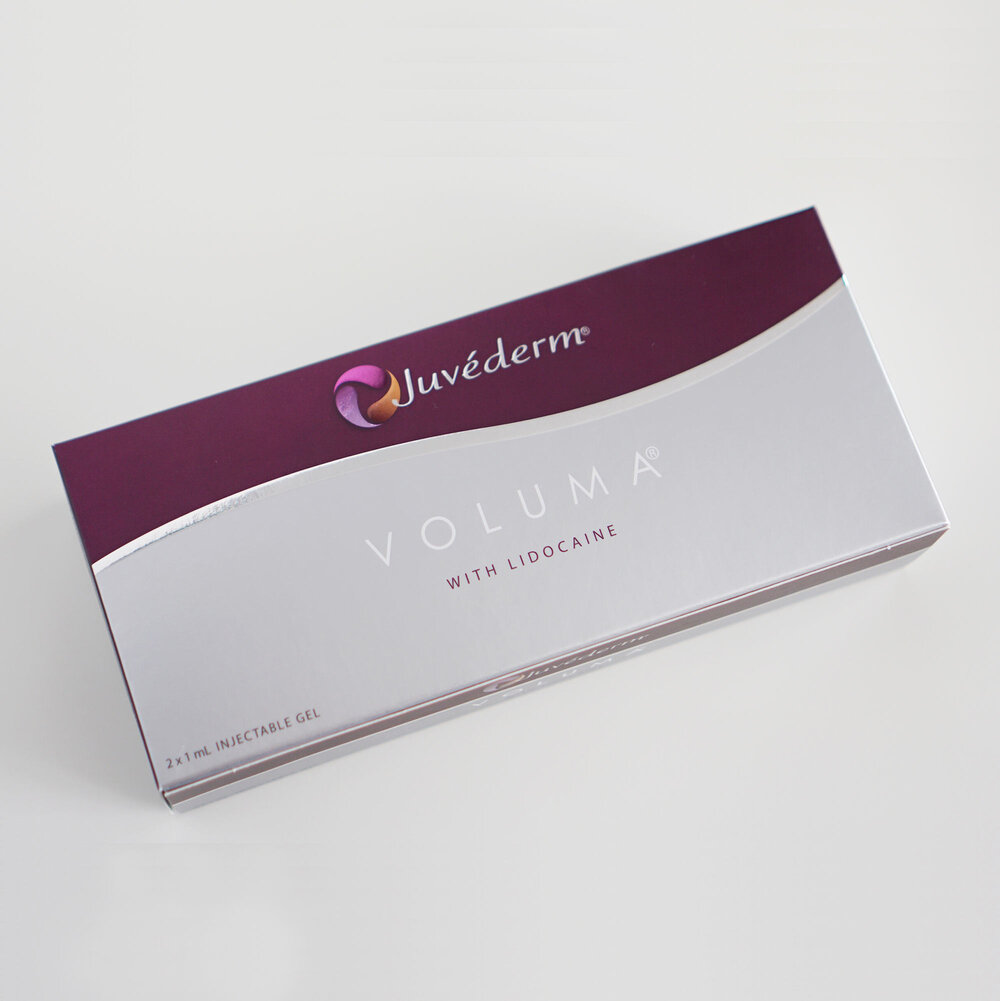
Hyaluronic acid fillers are the standard of care for lip augmentation. They are temporary (typically six to twelve months in the lips), reversible with hyaluronidase if needed, and available in formulations designed specifically for lip tissue. The major products used in lip augmentation include Juvederm Ultra, Juvederm Volbella, Restylane Kysse, and Restylane Silk.
Product selection matters. Softer, more hydrophilic products (like Volbella and Kysse) integrate naturally with lip tissue, provide subtle enhancement, and move naturally with lip animation. Firmer products provide more projection but feel less natural and are more prone to visible irregularities. For most patients seeking natural results, the softer formulations are preferred.
Placement is as important as product selection. Lip filler can be placed in the body of the lip (vermilion), along the vermilion border, in the cupid's bow, in the philtral columns, or in the perioral area for lines. Each placement achieves a different effect, and the combination is determined by the patient's specific anatomy and goals. Uniform injection throughout the lip body — rather than tailored, anatomical placement — produces an unnatural, sausage-like appearance.
Common Mistakes and How to Avoid Them
The most common cause of unnatural results is overfilling. The appropriate volume for a first treatment is almost always less than the patient thinks she wants. It is always possible to add at a two-week follow-up; it is not possible to subtract without reversal. Starting conservatively and building is the standard approach for new patients.
The second most common problem is ducklip deformity — excessive projection of the upper lip relative to the lower, often caused by over-treating the upper lip or injecting too superficially along the border. Natural lips have a specific ratio: the lower lip is generally 50 to 60 percent fuller than the upper. Violating this ratio produces a recognizable, artificial appearance.
A third issue is chronic overfilling over multiple treatment cycles. Patients who return every few months for top-ups without allowing the previous filler to fully metabolize gradually accumulate volume. Over time this produces the "pillow lip" appearance — a chronically overfilled, smooth, rounded lip that bears no resemblance to natural anatomy. Periodic "filler holidays" — allowing the product to fully metabolize — help prevent this.
Surgical Options: When Fillers Are Not Enough
For patients with significant perioral lines, elongated upper lip, or deflation that requires more volume than filler practically provides, surgical options exist. A lip lift — a surgical procedure that removes a strip of skin between the base of the nose and the upper lip border — shortens the lip, increases visible pink tissue, and creates lasting improvement in upper lip fullness and eversion. It is a permanent procedure with a small scar at the base of the nose that heals to near-invisibility in most patients.
Surgical fat grafting to the lips provides longer-lasting volume restoration than filler, using the patient's own fat. Results are permanent in a proportion of the transferred volume. The technique requires a donor site (typically the abdomen or inner thigh) and involves more recovery than filler injections, but for patients seeking lasting change, it is a worthwhile consideration.
Scheduling a Consultation
A lip augmentation consultation with Dr. Fern at our Greenwich, CT or Manhattan, NY office involves a careful assessment of lip anatomy, a direct conversation about goals and proportions, and product and technique selection tailored to your specific anatomy. We do not approach this as a high-volume injection service — each treatment is planned based on the patient's face, not a standard protocol.
If you have been hesitant about lip augmentation because of the unnatural results you've seen, that hesitation is worth honoring. The right approach, in the right hands, produces results that look like you — just a better, more youthful version. We're happy to show you what that looks like for your anatomy.