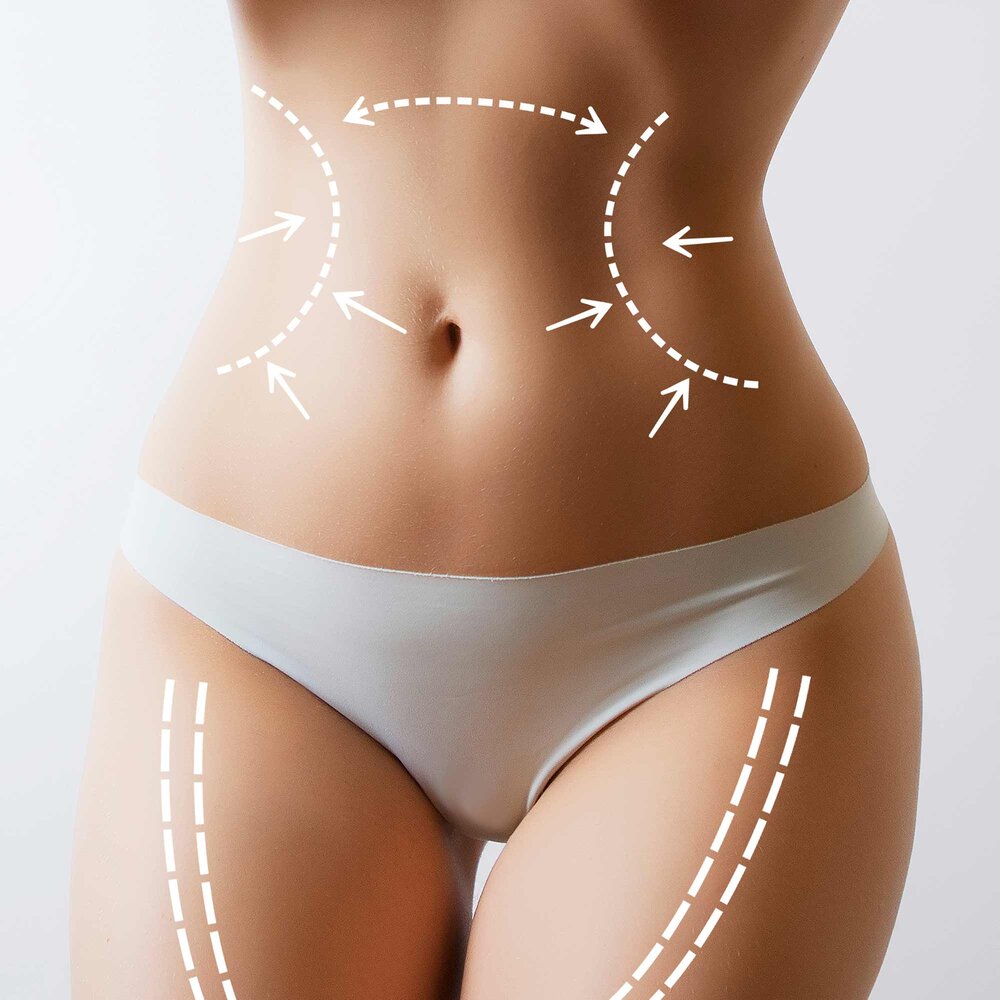
Liposuction is the most commonly performed cosmetic surgery procedure in the world, and one of the most misrepresented. Patients arrive at consultations with a wide range of expectations — some too high, some not high enough — and the gap between expectation and reality is where most disappointment lives. This guide is designed to close that gap before you sit down for your first consultation.
What Liposuction Is — and Is Not
Liposuction is a body contouring procedure. It removes localized fat deposits that are disproportionate to the rest of the body and resistant to diet and exercise. What it does not do is produce weight loss in any meaningful sense. A patient who loses three liters of fat during liposuction will weigh roughly three kilograms less — but this is not the goal and should not be the frame. The goal is shape.
The distinction matters because patients who approach liposuction as a weight loss tool will be disappointed. Patients who approach it as a precision reshaping tool — removing fat from specific anatomic zones to improve proportion — are consistently among the most satisfied patients in plastic surgery.
Liposuction also does not address skin laxity. If the skin in the treatment area has lost significant elasticity — from aging, pregnancy, or prior weight fluctuations — removing fat without addressing the skin will leave loose, irregular contour. This is the assessment we make at every liposuction consultation: does the skin have the elasticity to contract and conform after fat removal, or is this a patient who also needs skin excision?
Who Is the Right Candidate
The ideal liposuction candidate is within approximately 30% of their healthy body weight, in good general health, and has localized fat deposits that are disproportionate to the rest of the body. Common treatment areas include the abdomen, flanks (love handles), inner and outer thighs, hips, upper arms, neck and jawline, back, and the bra roll area.
What distinguishes a liposuction candidate from someone who needs a tummy tuck or body lift is the quality of the overlying skin. Good skin elasticity means the skin will contract after fat removal, producing a smooth contour. Poor elasticity — tested manually at consultation — means skin will remain redundant after liposuction, requiring excision to achieve a clean result.
Liposuction is not appropriate for patients with certain clotting disorders, active infections, or medical conditions that significantly impair healing. A thorough medical history and evaluation is part of every consultation at Dr. Fern's practice.
Age, in isolation, is not a disqualifying factor. We have performed liposuction on patients in their sixties and seventies who were excellent candidates because their skin retained adequate elasticity and their overall health supported the procedure safely. Conversely, we have declined to perform liposuction on younger patients whose skin quality indicated that a different procedure would serve them better.
The Tumescent Technique
Modern liposuction is performed using the tumescent technique — the injection of a large volume of dilute local anesthetic and epinephrine into the treatment area prior to fat removal. This serves several purposes: the fluid separates fat cells from surrounding structures, making removal safer and more precise; the epinephrine constricts blood vessels, dramatically reducing blood loss; and the local anesthetic provides extended post-operative comfort that can last into the following day.
The tumescent technique transformed liposuction safety. Blood loss during contemporary tumescent liposuction is a fraction of what it was with older techniques, and the precision of contouring has improved significantly because the tumescent fluid creates a consistent tissue plane for the cannula to work in.
Small Cannulas vs. Power-Assisted Liposuction
The instrument used to remove fat is called a cannula — a hollow metal tube through which fat is suctioned. The size and movement of the cannula matters significantly.
Small-bore cannulas (3–4mm) allow precise, feathered contouring with fewer surface irregularities. Larger cannulas remove fat faster but leave less room for fine-tuning and carry a higher risk of contour deformity.
Power-assisted liposuction (PAL) uses a cannula that vibrates rapidly, breaking up fat more efficiently with less physical effort from the surgeon. In experienced hands, PAL produces excellent results with reduced surgeon fatigue during large-volume cases — an important consideration when contouring multiple areas in a single procedure.
Dr. Fern uses small-bore cannulas and power-assisted technique where appropriate, selecting the approach based on the anatomic region, the volume to be removed, and the desired degree of precision.
Anatomic Zones and What Each Requires
Abdomen: The abdominal wall has distinct fat layers — superficial and deep. Liposuction of the deep layer provides the bulk of volume reduction. Superficial liposuction can improve definition but requires precision; aggressive superficial work risks surface irregularity. If diastasis recti (muscle separation) is present, liposuction will not address the underlying bulge — that requires abdominoplasty.
Flanks: The love handles respond reliably to liposuction and represent one of the most consistently satisfying treatment areas. The fat here tends to be well-localized and the skin elastic in younger patients. Flank liposuction is frequently combined with abdominal work and tummy tuck procedures to optimize circumferential shape.
Thighs: Inner thigh fat responds well, though the skin in this area tends to have less elasticity than other zones, requiring careful assessment. Outer thigh saddlebags are also a reliable target. Posterior thigh and banana roll fat (beneath the buttock) is more technically demanding and requires careful technique to avoid contour irregularity and changes to buttock projection.
Arms: Upper arm liposuction works well for patients with disproportionate arm fat and good skin tone. Patients with significant skin laxity ("bat wings") require arm lift (brachioplasty) to address the skin component — liposuction alone will worsen the appearance of loose skin in this area.
Neck and Jawline: Submental (under-chin) liposuction produces dramatic improvement in patients with a full neck or poorly defined jawline due to fat rather than skin laxity. It is a relatively brief procedure under local anesthesia or IV sedation and consistently produces visible results. Patients with significant skin laxity may need neck lift in addition.
How Much Fat Can Be Removed Safely
The ASPS guidelines recommend limiting outpatient liposuction to five liters of total aspirate. Beyond this threshold, the fluid shifts associated with large-volume liposuction create risks that typically require hospital-level monitoring and management.
Most body contouring liposuction cases — treating the abdomen, flanks, and thighs together — fall within this range without difficulty. Patients who require high-volume work may be staged across two procedures for safety.
More important than the total volume is the quality of the contouring. The question is never simply "how much can we take?" It is "how much removal produces the shape improvement the patient is seeking, at acceptable risk?" Those are sometimes very different answers.
Recovery: What to Realistically Expect
Days 1–3: Swelling, bruising, and a watery drainage from the small incision sites are normal. The drainage is residual tumescent fluid and blood-tinged fluid, not concerning. Compression garments are worn continuously. Pain is moderate and well-controlled with oral medication. Most patients are mobile but move carefully.
Days 4–7: Swelling peaks typically at 48–72 hours and then begins to slowly improve. By day five or six, most patients can return to sedentary desk work. The compression garment continues. Activity remains limited to walking.
Weeks 2–4: Bruising largely resolves. The treated areas still feel firm and somewhat numb — this is normal edema within the tissue and resolves progressively. Light lower-body exercise (walking, gentle stationary cycling) is typically permitted by two weeks.
Months 1–3: Full results are not visible until swelling has completely resolved — typically at three months for most patients. The final contour emerges gradually as the tissue consolidates. Compression is typically worn for six weeks and often for longer voluntarily because patients find it comfortable during the healing phase.
The Role of Lymphatic Massage
Manual lymphatic drainage (MLD) massage after liposuction has become a standard recommendation at many practices, including ours. The technique helps mobilize the edema fluid retained in the tissue after surgery, reducing firmness, improving contour definition sooner, and potentially reducing the risk of seroma formation.
We recommend beginning MLD with a trained therapist at approximately day 5–7 post-procedure, continuing weekly for four to eight weeks. Patients who commit to this often see results faster and with less of the prolonged firmness that can otherwise persist.
Maintaining Results
Liposuction removes fat cells permanently from the treated areas. Those cells do not regenerate. However, the remaining fat cells in the body — including those in the treated zones — can still enlarge with weight gain. Significant weight gain after liposuction will produce generalized fat accumulation that can partially obscure the result.
The practical implication: patients who maintain a stable weight see their liposuction results indefinitely. Patients who gain significant weight after surgery will see that weight distribute across the body, potentially including areas that were treated.
Maintaining the result is not about being at a specific weight — it's about being at a stable weight. Patients who weigh ten percent more than they did at surgery but have maintained that weight for years will still have their liposuction result, because the contouring reflects their shape at their maintained weight.
Scheduling a Consultation
At your liposuction consultation with Dr. Fern, we will examine the treatment areas, assess skin elasticity, discuss the specific volumes and zones appropriate for your goals, and provide a realistic preview of expected outcomes. Both Greenwich, CT and Manhattan, NY offices offer consultations for liposuction and combined body contouring procedures.
The most important thing we ask of our patients is honest expectations. Liposuction is a precision procedure that can produce significant improvements in body proportion. It is not a transformation of weight, health, or lifestyle. Patients who understand this distinction and approach the procedure with realistic goals are consistently satisfied with their results.