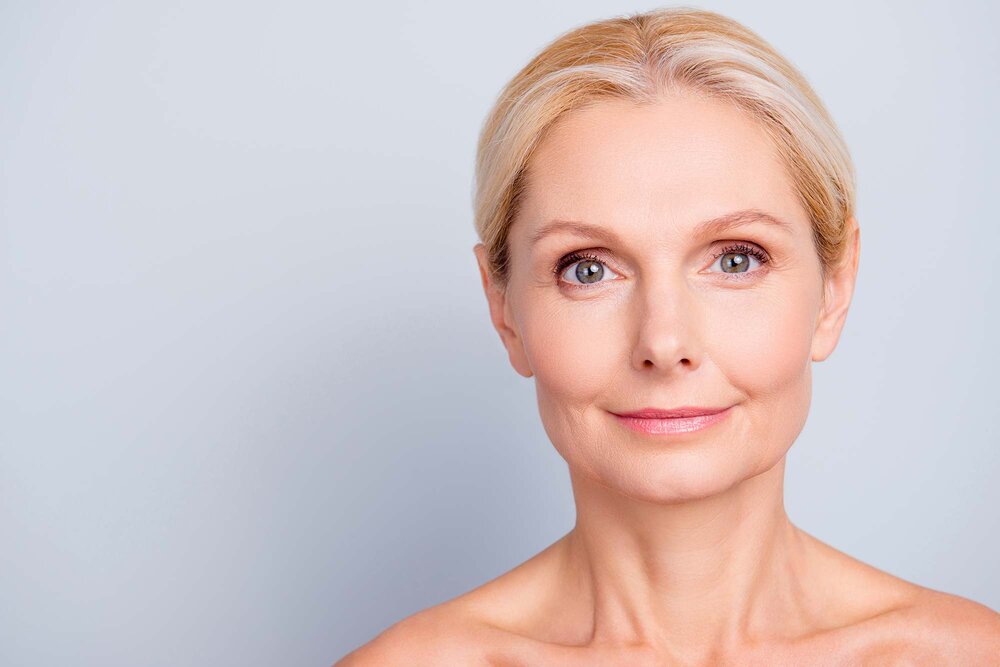
The neck is often the first area where patients notice aging, and the last area addressed in plastic surgery consultations. There is a disconnect: patients who are satisfied with a facelift result sometimes find themselves still bothered by the neck, while others are frustrated by neck laxity at an age when the face still looks relatively fresh. Understanding what creates neck aging — and what a neck lift specifically corrects — bridges that gap.
Why the Neck Ages Distinctively
The neck ages through several distinct mechanisms, often operating simultaneously. Skin laxity develops as collagen and elastin decline — the same process that affects the face, but often more visible in the neck because the cervico-mental angle (the angle between the chin and neck) is a very sensitive indicator of youthful anatomy. A sharply defined angle is a hallmark of youth; blunting and obliteration of that angle is a visible sign of age.
Platysmal banding is a separate and important contributor. The platysma is a broad, thin muscle that covers the front of the neck. With age, the two halves of the platysma separate in the midline, and the medial edges become visible as vertical bands or cords running from the chin down the neck. These bands are a structural finding — skin tightening alone does not eliminate them.
Submental fat accumulation — fat beneath the chin and in the neck — adds bulk that rounds and softens the jaw-neck transition. This may reflect true fat excess, or it may be primarily the descent of deeper fat compartments. In some patients it is constitutional (present even in youth and youth at lower body weights); in others it develops with age or weight gain.
Finally, submandibular gland ptosis — sagging of the submandibular salivary glands — can contribute to a "two bump" appearance in the lower neck that is often mistaken for fat. This finding is important to identify preoperatively because it requires a different surgical approach.
What a Neck Lift Addresses
An isolated neck lift — also called a lower rhytidectomy or cervicoplasty — corrects neck aging without addressing the midface or jowls. It is the appropriate procedure when the primary concern is the neck and the facial anatomy does not yet require rejuvenation, or when the neck requires more correction than was achieved from a prior facelift.
A full neck lift typically includes: incisions behind the ears (and sometimes a small incision under the chin), elevation and repositioning of the neck skin, direct treatment of the platysma muscle in the midline to correct banding, liposuction or direct excision of submental fat, and redraping and securing of the skin with removal of the excess. The result is restoration of the cervico-mental angle, elimination of bands, and a tighter, more defined neck contour.
The submental incision — a small horizontal incision under the chin — is used when direct access to the midline platysma is needed for band correction or fat removal. It is typically hidden in the natural submental crease and heals to near-invisibility in most patients.
Neck Lift vs. Facelift: When to Do Both
The neck and lower face share anatomy, and in many patients — particularly those in their fifties and older — both areas show significant aging simultaneously. In these cases, combining a facelift with neck lifting provides a more comprehensive and harmonious result than addressing only one region.
The decision to do both or only the neck depends on the patient's anatomy and priorities. Patients with significant jowling, nasolabial fold deepening, and midface descent are almost always better served by a combined facelift-neck lift. Patients whose primary visible aging is in the neck, with a face that still appears relatively youthful, are good candidates for an isolated neck lift that avoids operating on areas that don't need intervention.
Consultation involves a systematic assessment of both areas and a direct conversation about which anatomic zones are driving the patient's concerns. There is no standard protocol — the right operation is determined by the patient's face, not by age or by a default surgical approach.
Non-Surgical Alternatives and Their Limits
Injectable neuromodulators (Botox/Dysport) can relax the platysma and provide modest softening of neck bands. This is a legitimate treatment for mild, early banding, but it does not provide structural correction — the improvement is temporary and modest in more advanced cases.
Kybella (deoxycholic acid injection) can reduce submental fat in appropriately selected patients. It is effective for focal fat excess with good skin elasticity. It does not address platysmal banding, skin laxity, or submandibular gland ptosis, and it requires multiple treatment sessions.
Energy-based devices — Ultherapy, radiofrequency tightening — provide mild skin tightening and are useful for early laxity or as maintenance after surgical correction. For patients with significant skin excess or advanced platysmal changes, they do not provide the structural correction that surgery achieves.
The practical guidance: non-surgical approaches are appropriate for prevention and early changes. When the neck has bands, significant skin laxity, or substantial fat, surgery is the only treatment that addresses the underlying anatomy rather than temporarily softening its appearance.
Recovery After Neck Lift
Recovery from an isolated neck lift is generally less demanding than from a full facelift. Most patients take one week off from work and social activities. Swelling and bruising are concentrated in the neck and under the chin rather than distributed across the face. A compression garment worn for one to two weeks helps reduce swelling and supports the healing tissues.
Visible bruising typically resolves within ten to fourteen days. Swelling continues to diminish over four to six weeks, with final results apparent at three months. Most patients are comfortable in social situations within ten days to two weeks, though complete healing continues over several months.
Incision care involves keeping the areas clean and dry in the first week, followed by scar management with silicone products starting at four to six weeks.
Consultation
At your neck lift consultation with Dr. Fern at our Greenwich, CT or Manhattan, NY office, we will assess the specific contributors to your neck aging — skin laxity, platysmal banding, fat distribution, submandibular gland position — and discuss which surgical approach addresses your anatomy most precisely. We will also discuss whether your face warrants simultaneous treatment and provide an honest comparison of what surgery versus non-surgical options will achieve in your case.
Neck rejuvenation is one of the most impactful procedures we perform, with recovery that is manageable and results that are consistently satisfying. If the neck has been the part of your appearance that you'd most like to improve, this conversation is worth having.